
Between Iran and Ukraine
Why the Kremlin Welcomes Escalation in the Middle East

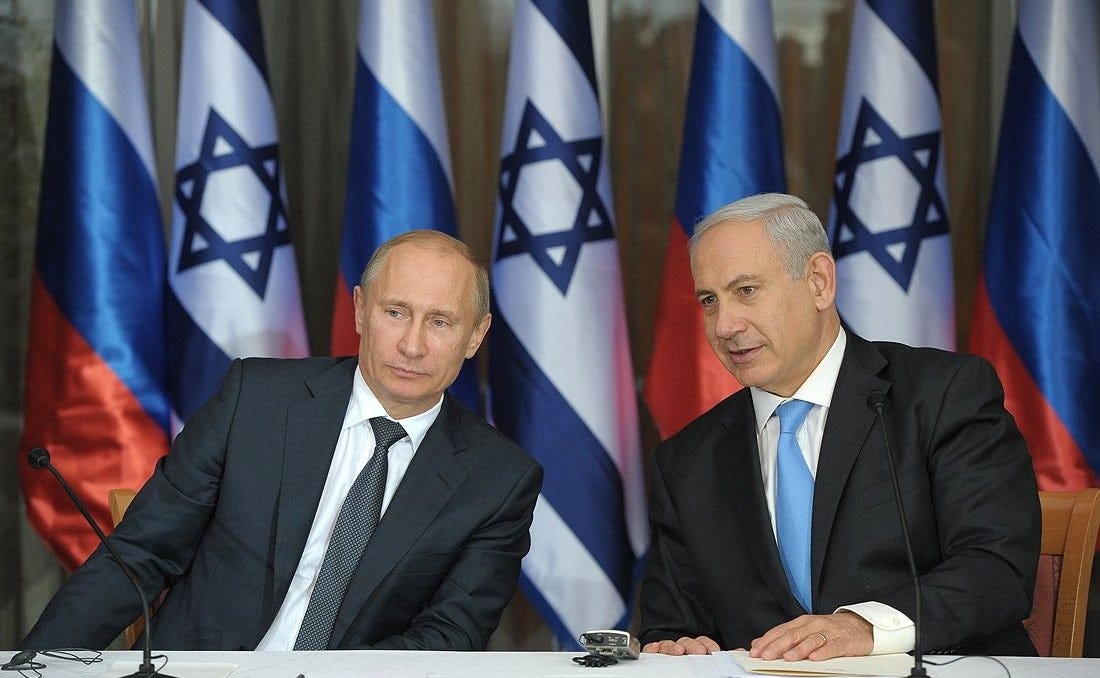
Russia reacted with relative indifference to the outbreak of war between Israel and Iran. This is not surprising at all: Putin is quite pleased and hopes that now he will be able to bargain with Donald Trump for new terms on Ukraine in exchange for non-intervention—in the conflict in Iran.
“Where is the howling?”
“As a result of the Israeli strike, a residential building in Iran was destroyed, 60 people were killed, 20 of them children,” says Margarita Simonyan, the queen of Russian propaganda, with a sorrowful look during a prime-time live talk show. One might expect her to begin condemning “Israeli and American militarism”—as her predecessors, the Soviet propagandists, once did. But that’s not what happens. Today’s Russian propaganda is completely indifferent to human lives—it only condemns those who call for humanism, regardless of their nationality.
“And where is the howling, I ask you? Where is the howling? I feel like going to an audiologist—maybe something's wrong with my hearing. Where is the public outrage? Why is the global press silent? And why are our emigrants silent?”
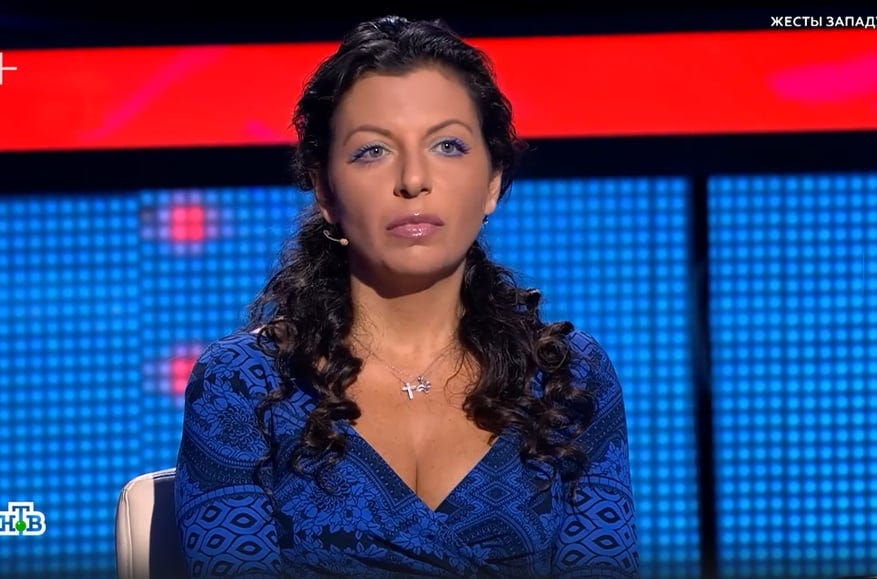
Margarita Simonyan, editor-in-chief of RT
This is a very telling moment. In recent years, Russian propaganda has consistently developed the same idea advanced by Vladimir Putin: all regimes are the same, there are no real democracies, scratch the surface and all politicians are equally corrupt and authoritarian, no one truly values human rights—some just pretend to. Everyone would love to have the right to wage aggressive wars; it’s just that weak countries can’t afford it.
Having accused the whole world and Russian emigrants of not caring about the deaths of Iranian civilians the way they do about Ukrainians—thus implying that they are all insincere and acting on orders—Simonyan then demanded that YouTube be shut down in Russia so that it would stop poisoning the souls of Russians. And the conclusion of her impassioned speech is the following:
“I hope we learn these lessons and take something useful from them. I hope that while the world is distracted by all of them, we will quickly finish what we started. Because, as Donald Trump said… if it weren’t for the whole world, Russia would’ve dealt with Ukraine in three days. I hope that’s exactly what will happen.”
Putin Above the Fray
In his speech at the St. Petersburg Economic Forum, Vladimir Putin was also notably restrained. He acknowledged that Russia and Iran are linked by a number of bilateral agreements—including a strategic partnership agreement signed in January of this year. However, he noted, these do not pertain to the military sphere. He also added that Russia had offered to help Iran establish an air defense system, but Iran declined.
In short, Putin did not come to Iran’s defense as some had expected. The Kremlin will, of course, criticize the participants in this conflict—but clearly not with the aim of intervening, rather to extract new concessions for itself.
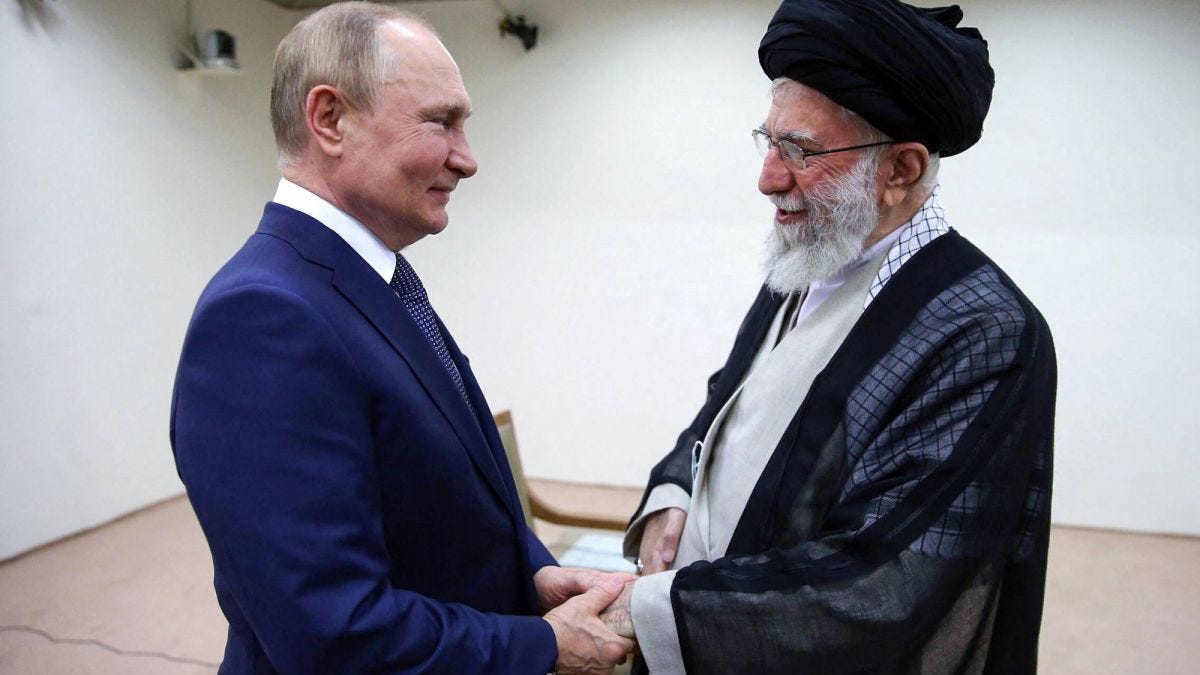
Putin and Khamenei
The conflict between Israel and Iran is, undeniably, good news for Putin. Oil prices are rising. The war in Ukraine is being pushed off the front pages of the world’s media. The “Putinization” of global politics is evident—full-scale warfare after 2022 no longer seems unthinkable.
On a personal level, Vladimir Putin has long been well acquainted with Benjamin Netanyahu. They have a long history of relations, having first met back in 2000, when Putin had just become president and Netanyahu, a former Israeli prime minister, was competing for leadership of the Likud party with Ariel Sharon.
Netanyahu is one of the leaders in the number of meetings held with Putin. They have repeatedly demonstrated their mutual rapport. For instance, in 2020, during the Holocaust remembrance forum at Yad Vashem in Jerusalem, the Israeli government gave Vladimir Putin the opportunity to speak—while denying that same opportunity to Ukrainian president Volodymyr Zelensky (a Jew whose family members died during the Holocaust).
“I try not to ruin anything, only to improve things,” Putin recently said when asked whether his relationship with Netanyahu had deteriorated after the invasion of Ukraine. In any case, Israel did not join the international sanctions against Russia—for example, it did not close its airspace to Russian aircraft, so until this day there were still direct flights between Moscow and Tel Aviv.
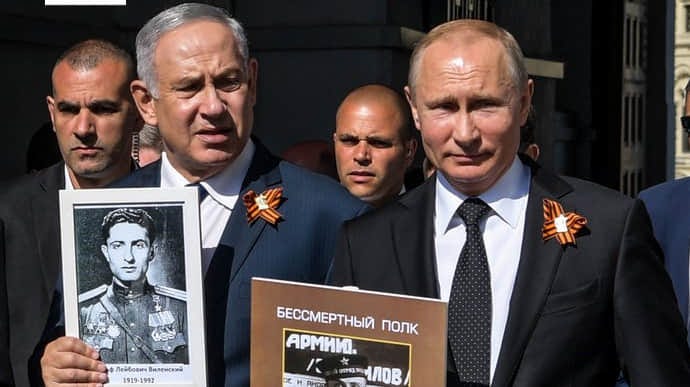
Netanyahu and Putin take part in the Victory Day celebration on Red Square in Moscow
When the armed conflict had just begun, Vladimir Putin called both the Israeli prime minister and Iranian president Masoud Pezeshkian. He lamented that the Israeli strikes were violating the UN Charter. He even mockingly offered Donald Trump Russia’s mediation services as a peacemaker.
“We have very friendly relations with Iran,” he said at the St. Petersburg forum. “We don’t impose anything on anyone; we simply share our view of how the situation might be resolved, but the decision lies with the political leadership of Iran and Israel.”
Managed Chaos
According to sources in Moscow, Putin’s own war in Ukraine is, of course, more important to him than the conflict between Israel and Iran. That’s why, as Margarita Simonyan herself admitted, Putin will do everything possible to use the war in Iran to his advantage—namely, to trade his refusal to assist Iran for certain concessions from the Trump administration regarding Ukraine. Preserving Russia’s status as a neutral and even friendly party in the Iran-Israel conflict could appear to be an important goal for the United States—regardless of the fact that Putin never intended to take Iran’s side. The rhetoric that Putin is helping Trump avoid World War III will undoubtedly be used more than once, both in Moscow and in Washington.
When asked about the possible assassination of Iran’s Supreme Leader Ali Khamenei, Putin replied: “I don’t even want to discuss such a possibility.” According to a source close to the Kremlin, Russian authorities truly do not believe that the current conflict will lead to regime change in Iran. The prevailing view within Russia’s cynical political elite is that the goal of the current war is war itself—escalation, the spread of chaos. This outlook aligns perfectly with Putin’s worldview, and—Moscow believes—with Benjamin Netanyahu’s as well. They believe that managed chaos is not frightening for Moscow, Tel Aviv, or even Tehran, but rather the optimal path to achieving their respective goals.